Safety
Water safety for toddlers
Water needs an adult within arm's reach. Your job is the body, the fence, and the bathwater, not a floatie with a face on it.
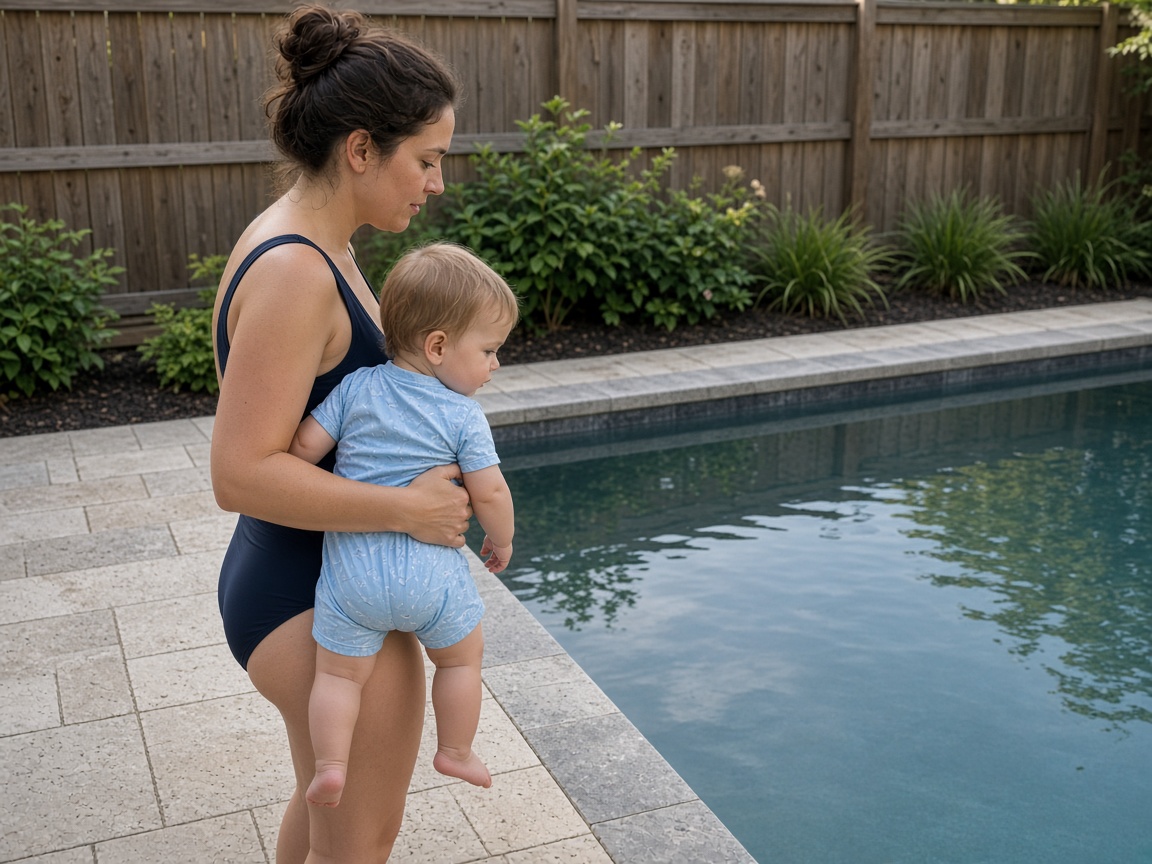
An adult in a navy swimsuit holds a toddler at the stone edge of a still backyard pool, with a wooden fence and shrubs behind them.
Watching means an adult whose job is the water, not a phone, not a group chat, not a grill. If you need to leave, take the child with you. A sibling is not a lifeguard.
Home water includes buckets, toilets, and dog bowls. Empty the bucket. Close the bathroom door. A few inches is enough water to be a problem for a toddler who tips forward.
Try this
- Assign one water watcher when more than one adult is present.
- Fence pools on all sides with a gate that latches. Check the latch.
- Empty tubs and buckets as soon as you are done.
- Skip inflatable rings as safety gear. They are toys.
- Take a CPR class before summer if you have not taken one.
Swim lessons can help older toddlers. They do not replace an adult. A child who paddled last week can still slip this week. Lessons are a layer. Supervision is the layer you never skip.
Travel changes the map. Hotels, relatives, and vacation rentals hide pools behind doors you do not usually have. Walk the place when you arrive. Ask where the water is. Then assign the watcher again.
In the house this month
Bathtime ends when the adult leaves. Take the child with you if you forgot the towel. A toddler can tip into a few inches. That is the whole paragraph.
Neighbors' pools are part of your map even if you do not swim. Ask. Walk the fence line when you visit. Children this age wander toward the interesting door.
Flotation vests are not a watcher. They can buy seconds. They cannot replace an adult whose phone is in the kitchen.
If you are the only adult at a picnic near water, you are the watcher. Food can wait. The grill can wait. The child cannot be an afterthought next to a lake.
What you can skip
Skip a floatie as a watcher. Skip leaving bathwater to grab a towel. Skip trusting a sibling as a lifeguard.
Skip a hotel pool without walking the fence and assigning an adult.
Keep the range in view
An adult within arm's reach. Empty buckets. Close bathroom doors. A floatie is a toy. Hotel pools still need a watcher. Take the child with you if you forgot the towel. Drowning is why this page is short and firm.
Keep the range in view
If you are the only adult at a picnic near water, you are the watcher. Food can wait. The grill can wait. The child cannot be an afterthought next to a lake.
Keep the range in view
Swim lessons can help older toddlers. They do not replace an adult. A child who paddled last week can still slip this week.
Check in if
If there has been any unsupervised water event, even a brief one, tell your pediatrician. If you do not know infant and child CPR, take a class.
Related ages: 12-18 months, 18-24 months, 24-36 months. Pillars: Behavior.
Sources
- CDC. Preventing drowning. cdc.gov/drowning
- American Academy of Pediatrics. Drowning prevention for curious toddlers. HealthyChildren.org
- CDC. Positive parenting tips: toddlers (1 to 2 years). cdc.gov
- CDC. Milestones by 1 year. cdc.gov/act-early/milestones/1-year.html