Seasonal
Holiday travel with a toddler
Take the seat, the two books, and the snack rhythm. Your job is a shorter day, not a perfect trip.
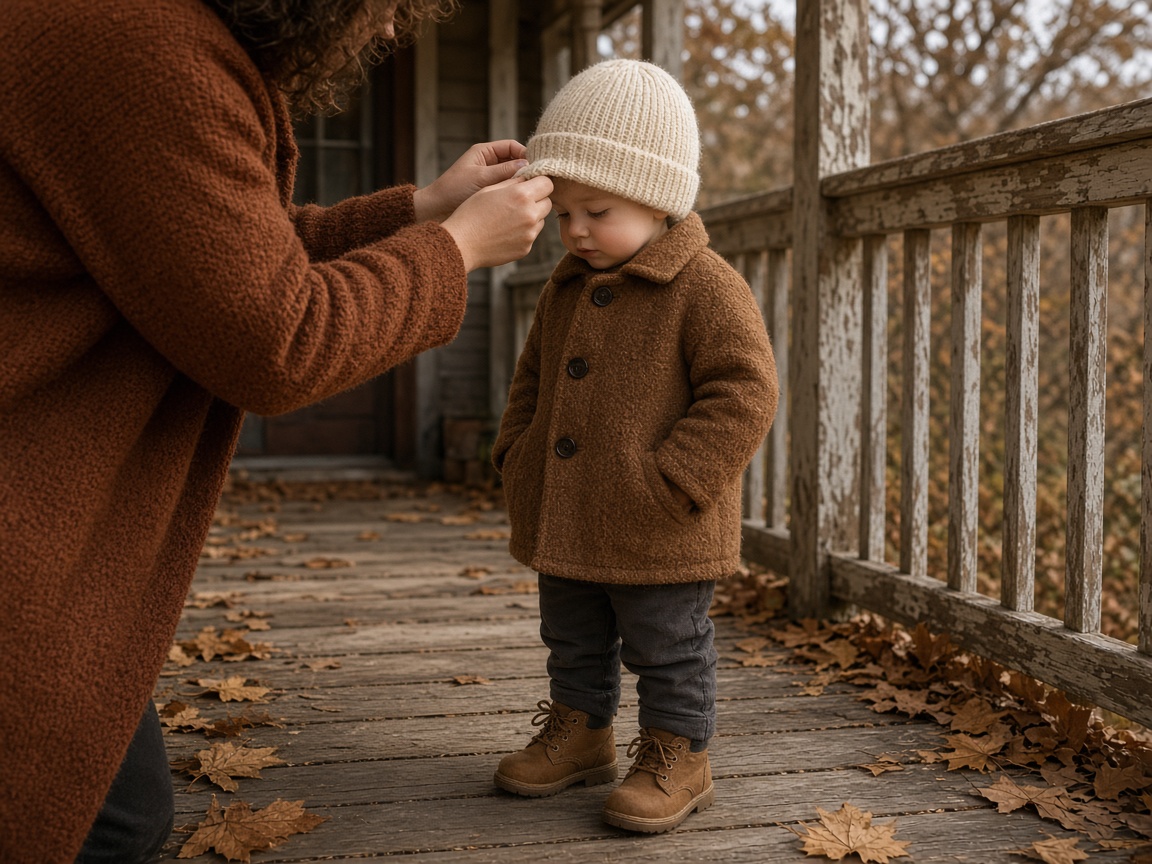
An adult in a rust cardigan ties a cream knit hat on a toddler in a brown wool coat and boots on a wooden porch scattered with autumn leaves.
The car seat goes with you. NHTSA car seats and booster seats still wants rear-facing until the seat's height or weight limit, including at the cousin's house. A lap on the highway is not a holiday exception. AAP HealthyChildren on car seats says the back seat is where children younger than 13 belong. If you fly, AAP HealthyChildren on flying with a baby is direct: the FAA does not require a ticket for a child under 2, so an airline may let you hold the child. AAP still says no to a lap as the plan. The safer option is an FAA-approved car seat in a ticketed seat. Allowed is not the same as safest.
Sleep will slip. Bring the two books and the phrase you use at home. Offer a nap in the stroller if the crib is a new smell. Count the day. A late night plus no nap is how the grocery-store tantrum follows you to someone else's kitchen.
Food on the road should be familiar. New foods can wait until everyone can sit. Pack the water. Skip the all-day juice as a peace treaty. You will still need dinner later.
Try this
- Pack the car seat, two books, a familiar snack, and a spare outfit in the bag you can reach.
- Keep one piece of the bedtime sequence even if the bath is gone.
- Assign a water watcher if there is a pool.
- Tell hosts the nap window. You can be gracious and still leave the table.
- Plan a shorter visit than the adults wanted.
Screens on a long drive are a family decision. If you use them, they are still not the crib. When you arrive, return to the hour you use at home as soon as you can. The house you are visiting does not set your media policy.
You do not have to attend every event. A toddler is not a small adult with a party hat. Leaving early is a safety plan. It is also a kindness to the child who has already done a plane, a car, and four new faces.
In the house this month
A second time zone will move the nap. Keep the sequence and accept a messy first night. Do not also add a late party and a new bed and a missed meal. Pick the trip's one hard thing.
Family photos can wait if the child is done. A crying child in a matching outfit is not a required holiday output. Leave. Eat later. The photo can be a porch and a coat.
If you stay with people who do not child-proof, bring the gate or stay in a room you can close. You are not insulting the host. You are bringing the child's new walking.
The trip home is part of the trip. Keep a snack and the two books in the bag you did not check. A last hour that is familiar makes the next bedtime possible.
What you can skip
Skip the matching-outfit photo if the child is done. Skip a borrowed seat you cannot install. Skip a pool without a watcher.
Skip attending every event. Leaving early is a plan.
Keep the range in view
The seat, the two books, a shorter day. Water still needs a watcher. A new house still needs a closed door. You do not have to attend every event. The trip home is part of the trip.
Check in if
If travel includes water or a new sleep space that feels unsafe, change the plan and ask your pediatrician before a long trip if your child has been ill. A hotel pool still needs a watcher. A borrowed seat still needs the manual.
Related ages: 12-18 months, 18-24 months, 24-36 months. Pillars: Sleep, Behavior.
Sources
- CDC. Positive parenting tips: toddlers (1 to 2 years). cdc.gov
- National Highway Traffic Safety Administration. Car seats and booster seats. nhtsa.gov
- American Academy of Pediatrics. Car seats: information for families. HealthyChildren.org
- American Academy of Pediatrics. Flying with baby. HealthyChildren.org
- AAP endorsement of AASM pediatric sleep duration recommendations. Pediatrics. 2016;138(2):e20161601. publications.aap.org
- AAP Council on Communications and Media. Media and Young Minds. Pediatrics. 2016;138(5):e20162591. publications.aap.org