Safety
Rear-facing car seats
Keep the seat rear-facing until the child reaches the top height or weight limit allowed by that seat. A birthday is not the limit.
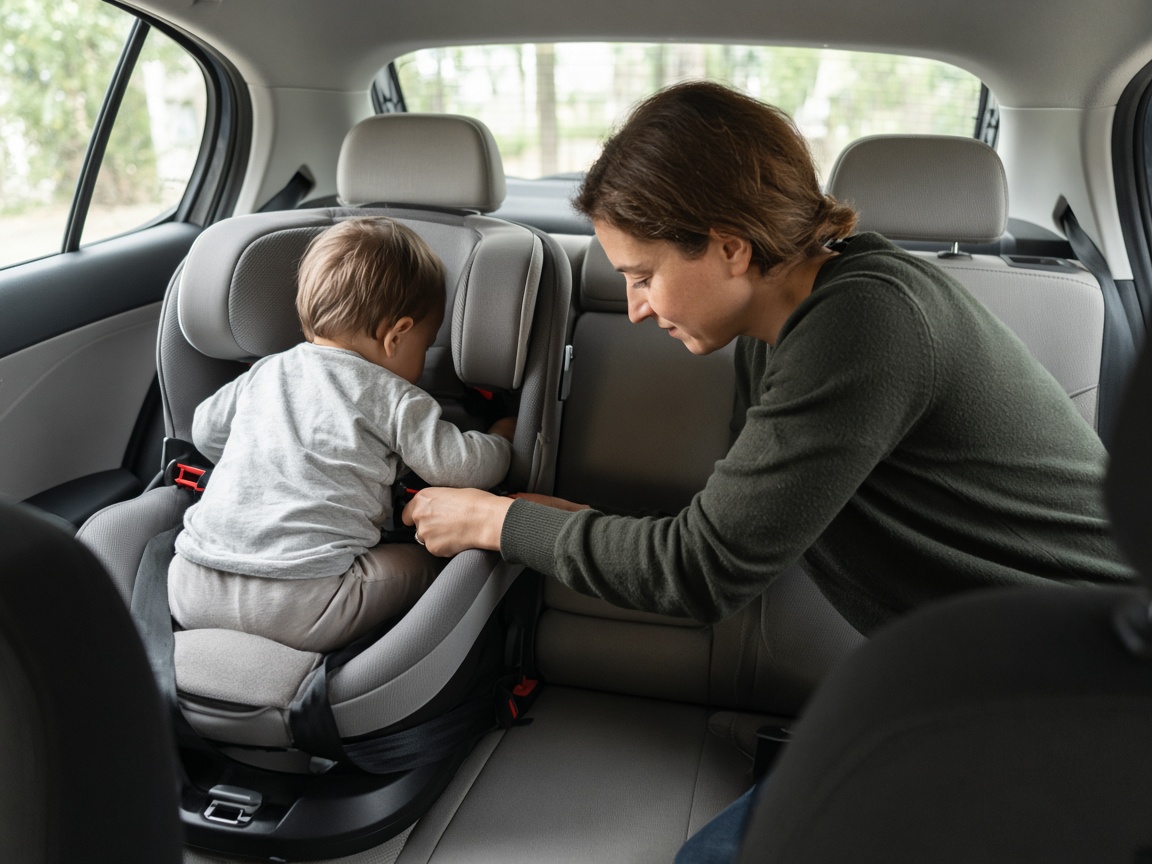
A parent in a dark green sweater leans into a car to buckle a toddler into a rear-facing harnessed car seat.
A child can be two and still belong rear-facing. Legs can bend. Bent legs are not a medical emergency. A turned seat before the limit is a comfort decision for the adult, not a safety upgrade for the child.
Install matters as much as the arrow on the box. The seat should not move more than an inch at the belt path. The harness should be snug. Thick coats go under a blanket, not under a loose harness.
Try this
- Read the paper labels on your seat for the rear-facing limits.
- If you are unsure, use the inspection-station locator on the NHTSA car-seat page or a hospital program.
- After any crash, ask whether the seat must be replaced.
- Show grandparents how the harness clicks. Do not assume.
- If a rideshare is unavoidable, bring the seat. A lap is not a car seat.
Daycare vans and extra grandparents are how children end up in the wrong seat. Write the limit on a note in the seat pocket. The note is for adults. The child cannot advocate at 16 months.
This page does not replace the manual in your glove box. If the manual and a well-meaning uncle disagree, the manual wins.
In the house this month
Winter coats change harness fit. Buckle the harness snug on indoor clothes, then put a blanket over the child. A puffy coat under a loose harness is a gap you cannot see until you need the harness.
Used seats have a history you may not know. If you cannot confirm the crash history and the expiration date, skip the bargain. This is not the place to save the cost of a dinner out.
A child who cries rear-facing is a child who may also cry forward-facing. Crying is not a limit on the label. The label is the limit.
Take a photo of a correct harness for grandparents and send it before the first solo pickup. Then watch them do it once. Kindness plus one correction is enough.
What you can skip
Skip turning the seat for a photo. Skip a puffy coat under a loose harness. Skip a used seat with no history.
Skip a lap in a rideshare. Bring the seat or do not go.
Keep the range in view
Rear-facing until the seat's height or weight limit, not until a birthday. Bent legs are allowed. Coats go over a snug harness. Used seats need a history. Bring the seat or do not go.
Keep the range in view
Show grandparents a photo of a correct harness, then watch them click it once. Kindness plus one correction is enough. The child cannot advocate at 16 months.
Keep the range in view
After any crash, ask whether the seat must be replaced. Do not guess from a photo. The manual in the glove box beats a well-meaning uncle.
Check in if
If the seat was in a crash, or you cannot get a tight install, have a certified child passenger safety technician check it. Call your pediatrician after a crash if anyone was hurt. Do not guess from a photo on your phone.
Related ages: 12-18 months, 18-24 months, 24-36 months. Pillars: Behavior.
Sources
- National Highway Traffic Safety Administration. Car seats and booster seats. nhtsa.gov
- National Highway Traffic Safety Administration. How to install rear-facing car seats. nhtsa.gov
- American Academy of Pediatrics. Car seats: information for families. HealthyChildren.org
- CDC. Positive parenting tips: toddlers (1 to 2 years). cdc.gov