Self-care
Potty readiness signs
Watch for a cluster of signs, not a birthday. Starting before the body and the interest are there adds stress and can slow the work.
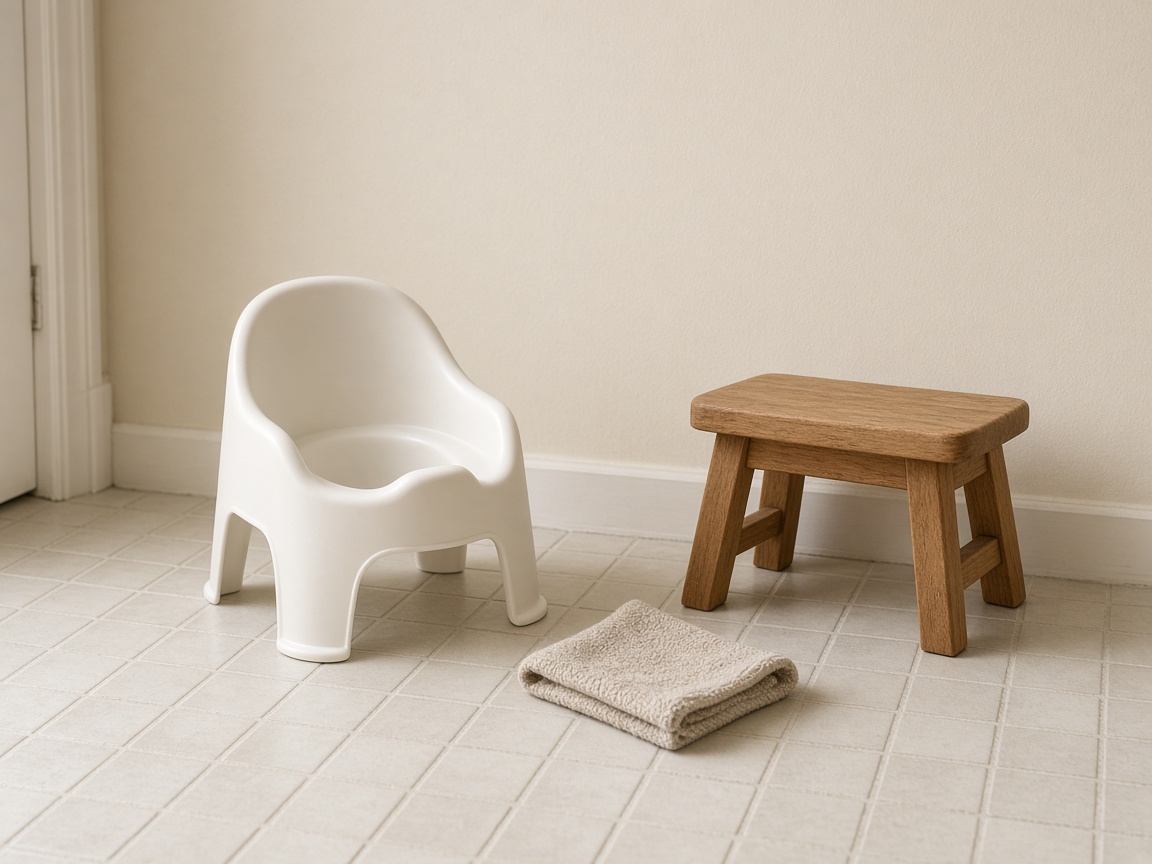
A white potty chair, a small wooden stool, and a folded washcloth sit on light bathroom tile.
AAP lists signs a child may be ready. You do not need every item on the same Tuesday: dry at least 2 hours at a time, or dry after naps; signs they are about to go, such as grunting, freezing, or squatting; following simple instructions; walking to the bathroom and helping with clothes; disliking a wet diaper; asking for a potty or bigger underwear.
Readiness is a cluster. One dry nap is not a green light. A child who can walk to the bathroom but cannot pause a game is still collecting skills. CDC's 30-month list includes taking off some clothes. That skill makes the logistics kinder. It is not a test you administer in the hallway.
Words matter. Name pee and poop in plain language. Skip shame words. A potty chair lets feet reach the floor. That is easier than a tall seat at the start. If you begin and get a long fight, pause. Diapers are not a failure.
Childcare deadlines are a separate problem. Ask what the room can support. A classroom that requires underwear by a certain birthday is making a program rule, not a developmental law. Take that rule to the clinician if it does not match the child in front of you.
Try this
- Name pee and poop in plain words. Skip shame words.
- If it is comfortable, let them watch a trusted adult use the toilet.
- Start with a potty chair so feet can reach the floor.
- If you begin and get a long fight, pause.
- Ask a program what they can support before you race a deadline.
Constipation makes training harder. Hard stool hurts, and a child who expects pain will hold. Food, water, and the clinician belong in that conversation. Do not treat withholding as stubbornness first.
In the house this month
Underwear before readiness is how accidents become a mood. If a program wants underwear and the child is not dry for two hours, take that sentence to the clinician and to the director. You can ask for a later start. You can also ask what support looks like when accidents happen, because they will.
Night dryness is a later skill than day dryness. Do not take away the overnight diaper because the day is going well. Sleep already has enough jobs. A wet bed at 2 a.m. is not a teaching moment. It is a laundry moment.
Constipation hides inside training fights. If stool is hard, if the child cries on the potty, if they hide to poop in a diaper after a week of success, pause training and treat the stool. Ask the clinician. Do not add stickers to a child who is in pain.
Siblings and cousins will be used against you in conversation. Other children's timelines are not a method. Your child's cluster of signs is the method.
What you can skip
Skip starting because a cousin started. Skip punishment for accidents. Skip taking away the night diaper to speed the day.
Skip shame words for poop. The body is not a moral event.
Keep the range in view
Readiness is a cluster between 18 months and 3 years, not a birthday. AAP and CDC both tell you to wait for signs. If you start and it goes badly, pausing is part of the method. Diapers are still allowed.
Check in if
Call your pediatrician if there is pain, blood, hard withholding, or regular constipation. Ask the pediatrician for help if a program deadline is pushing you past what the child can do. This page does not diagnose constipation or a toileting delay.
Related ages: 18-24 months, 24-36 months. Pillars: Food, Behavior.
Sources
- American Academy of Pediatrics. The right age to potty train. HealthyChildren.org
- CDC. Milestones by 2 years. cdc.gov/act-early/milestones/2-years.html
- CDC. Milestones by 30 months. cdc.gov/act-early/milestones/30-months.html