Behavior
Sharing is hard at 2
Young two-year-olds often play next to each other, not with each other. Your job is to protect both piles and teach turns with your body nearby.
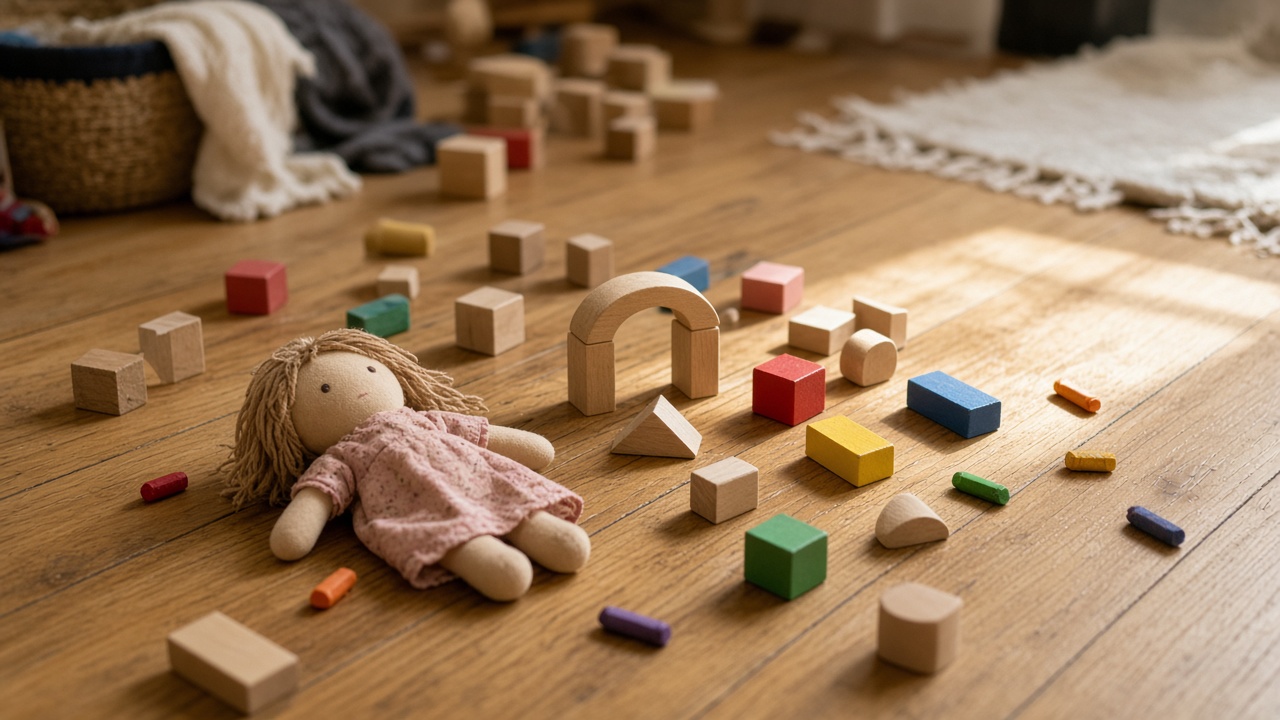
A rag doll in a pink dress lies on a hardwood floor among colorful wooden blocks and crayon stubs. A basket and a fringed rug sit in the background.
Turns work when an adult runs them. Two toys that are alike help. A timer the child can see helps some families and hurts others. Your voice should stay smaller than the toy.
Try this
- Start with side-by-side play and duplicate toys when you can.
- Stay close enough to stop a grab before it lands.
- Name the turn: Maya's turn, then your turn. Then enforce it.
- End the play date while it is still almost working.
- Notice any moment they wait, even for two seconds.
Sharing is not the same as giving a treasure to a stranger because an adult is embarrassed. Some toys can stay home. That is a reasonable boundary. The park can have the rest.
If a child screams when another child sits nearby, look at sleep and at how sudden the visit was. A slow arrival, a snack, and a shorter stay are behavior tools. They are also hospitality.
In the house this month
A favorite object can stay home. You are allowed to protect a bear. The park can have the trucks that are willing to be trucks.
Adults who say we share here to a 22-month-old are talking to themselves. Stay close and run the turn. The sentence can come later, when waiting is possible.
If a play date always ends in tears, shorten it. Twenty minutes of almost-working is better than an hour of a postmortem in the car.
Notice when they hand something over on purpose. That moment is rare and easy to miss because you are watching the other child. Name it once. Then keep the afternoon small.
What you can skip
Skip forcing a treasure into a stranger's hands. Skip a lecture about kindness to a child who cannot wait ten seconds yet.
Skip a one-hour play date that always ends in tears. Shorten it.
Keep the range in view
Side-by-side comes before handing over a truck. Duplicate toys help. An adult runs the turn. Favorite objects can stay home. Shorten the visit while it still almost works.
Keep the range in view
A child who screams when another child sits down may need a slower arrival and a snack, not a speech about generosity. Shorten the visit. Stay close.
Keep the range in view
Some toys can stay in the bag. That is a boundary, not a failure to socialize. The park can have the rest.
Check in if
If play dates always end in bites or in a child who cannot enter a room with other children, take that to your pediatrician. One hard afternoon is ordinary.
Related ages: 18-24 months, 24-36 months. Pillars: Behavior.
Sources
- CDC. Milestones by 2 years. cdc.gov/act-early/milestones/2-years.html
- CDC. Milestones by 30 months. cdc.gov/act-early/milestones/30-months.html
- CDC. Milestones by 3 years. cdc.gov/act-early/milestones/3-years.html
- CDC. Parenting toddlers and preschoolers. cdc.gov/parenting-toddlers