Language
Reading aloud from 12 to 36 months
Two short books on a lap will do more than a new app. Your job is to point, pause, and let them turn the page the wrong way.
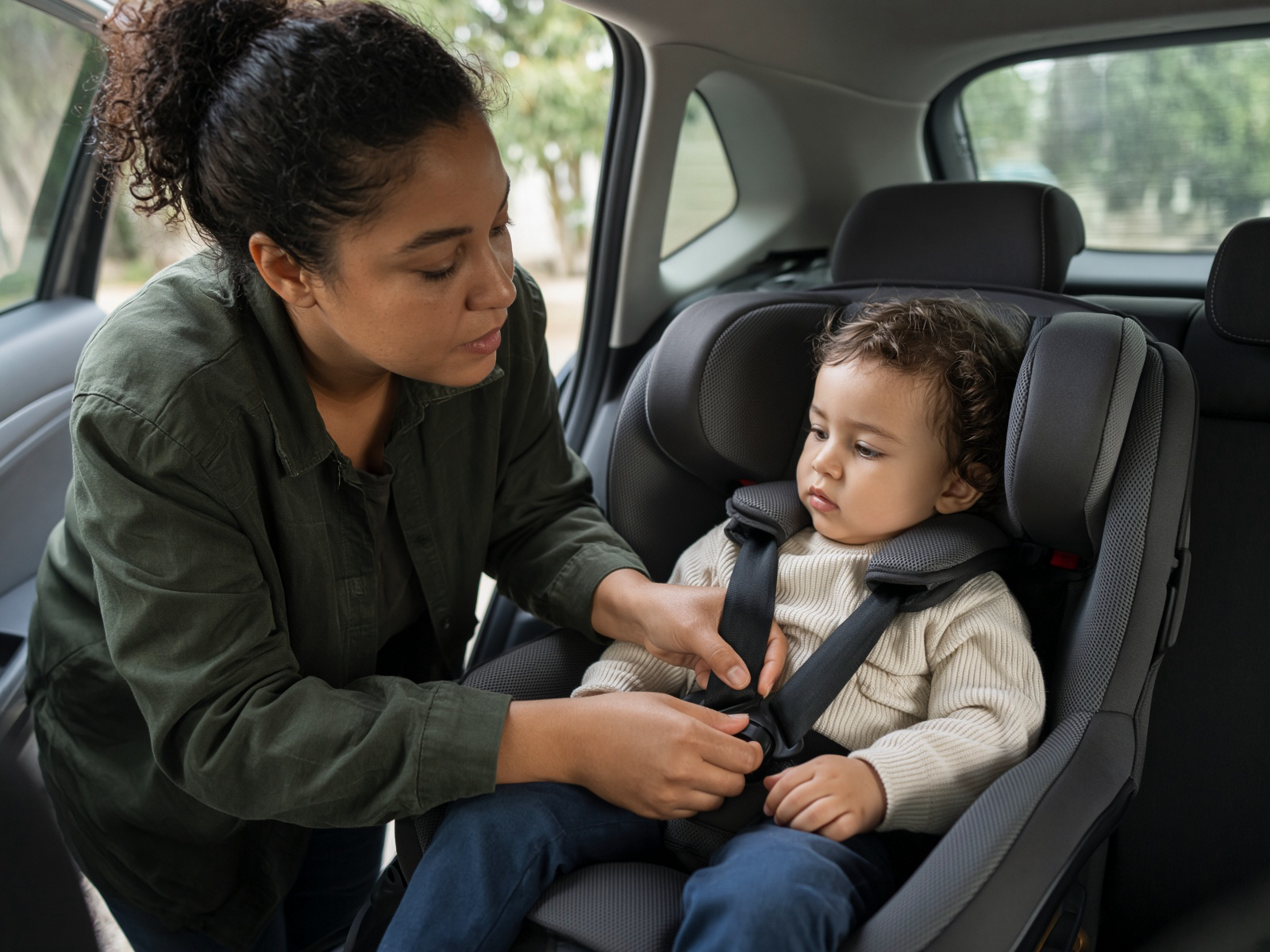
An adult in a dark green shirt leans into a car and buckles a toddler in a cream knit sweater into a harnessed car seat.
The same book again is a feature. Children this age learn the next word because the page did not change. You can be bored. They can still need Goodnight Moon.
AAP's media policy puts high-quality programming in a small box and asks you to sit with it. A book already has you in the room. That is why the bedtime sequence names books on purpose.
Try this
- Keep a stack of three books where the child can reach them.
- Point to one thing on the page and wait.
- Let them hold the book, even upside down.
- Name feelings in the pictures: mad, sad, done.
- If they walk away, leave the book open. You can finish later.
Library cards are cheaper than a tablet and do not need a charger. A short visit is enough. Leave before the tantrum if you must. The stamp still counts.
Reading is not a race to phonics. It is a voice they know on a page they can touch. If English is not the only language in the house, read in the language you dream in. The child needs your fluent face more than a perfect accent in a second tongue.
In the house this month
Board books survive teeth. Paper pages survive less. If they want to turn pages, let them. The story can be three pages long. The lap is the point.
A tired adult can read badly. That is still reading. You may skip pages. You may not replace the book with a phone because you are tired. The phone is a different ending.
Libraries often have a short toddler time. Leave if it is too much. The card still works on the way out.
If your child brings you the same book for a month, you are doing it right. The next word is hiding in the page they already know.
What you can skip
Skip replacing a book with a phone because you are tired. Skip a race to phonics.
Skip buying a new title every day. The same book is the curriculum.
Keep the range in view
The same short books, a point, a pause. Screens down. A tired adult still counts. A library card is enough. This is shared attention, not phonics. Read in the language you dream in.
Keep the range in view
If they walk away, leave the book open. You can finish later. The lap will be there tomorrow. The phone does not have to take the ending.
Check in if
If your child never looks at a book with you and you are worried about vision, hearing, or interest in faces, ask your pediatrician at the visit. Disliking one title is ordinary.
Related ages: 12-18 months, 18-24 months, 24-36 months. Pillars: Behavior.
Sources
- CDC. Milestones by 18 months. cdc.gov/act-early/milestones/18-months.html
- CDC. Milestones by 2 years. cdc.gov/act-early/milestones/2-years.html
- CDC. Milestones by 30 months. cdc.gov/act-early/milestones/30-months.html
- AAP Council on Communications and Media. Media and Young Minds. Pediatrics. 2016;138(5):e20162591. publications.aap.org