Language
Late talking: when to ask
If you are wondering whether words are late, you already have a job: notice, write two examples, and ask. You do not need a kitchen-table diagnosis.
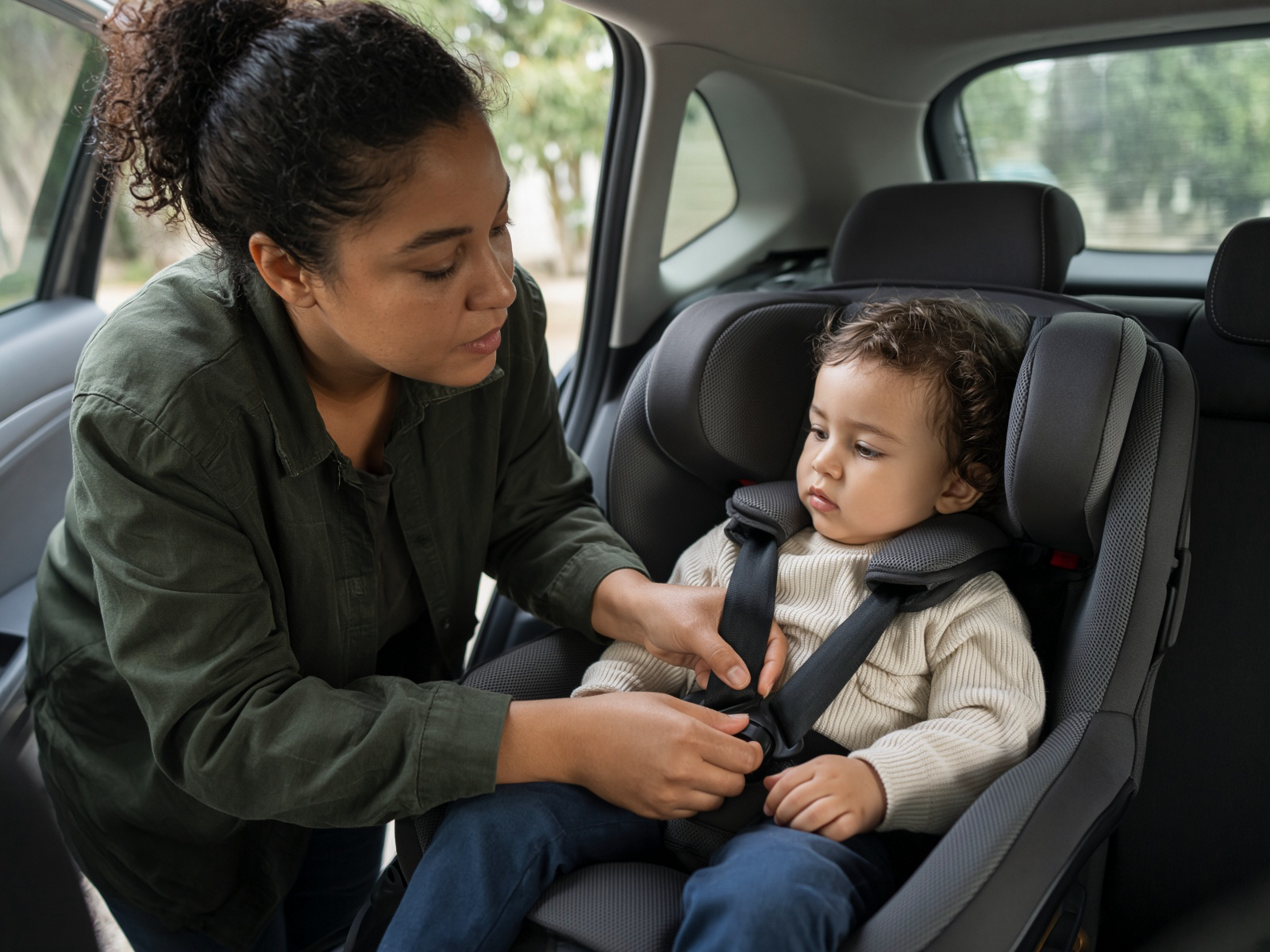
An adult in a dark green shirt leans into a car and buckles a toddler in a cream knit sweater into a harnessed car seat.
Most children try three or more words besides mama or dada by 18 months and put two words together by 2 years. Those lines come from CDC milestones by 18 months and CDC milestones by 2 years. Missing one item is a reason to talk, not a verdict. A cluster of misses, a lost skill, or a gut feeling is a reason to call before the birthday.
Write what you hear. Baba for bottle counts as a word if the child uses it on purpose. A gesture that means more counts as communication. Bring the notes. They beat a vague I think we are behind.
Try this
- Write three things your child can do with words or gestures.
- Write one thing that worries you.
- Ask what screen the clinic uses and what happens if it says look closer.
- Ask about hearing if words are few.
- Call early intervention if you do not want to wait for the appointment.
Do not drill flashcards the night before a visit. Do not compare word counts at the park. Other children are not a validated tool. Your clinician and a standardized screen are.
If someone tells you to wait and see and you are still worried, ask again. AAP screening ages exist because waiting is how months disappear. You are allowed to be the person who does not wait.
In the house this month
Family stories about Uncle Joe who did not talk until 4 are not a screening tool. Uncle Joe did not have today's early intervention. You do.
If two clinicians have told you different things, ask for the screen in writing and for the next appointment. Confusion is a reason to get more specific, not a reason to go home and wait.
A child who is understood only by one parent still has a voice. Bring that parent to the visit if you can. Or bring a short video of the child's usual sounds. Ask first whether the clinic wants a video.
You can call early intervention the same week you call the clinician. You do not have to choose. CDC's directory exists so you do not wait for a perfect referral letter.
What you can skip
Skip Uncle Joe stories as a method. Skip wait and see if you are worried. Skip drilling cards the night before.
Skip choosing between the clinician and early intervention. You can call both.
Keep the range in view
Write examples. Ask. Do not wait on a feeling. Lost skills and no pointing are now problems. You can call early intervention without a referral. Uncle Joe is not a screen.
Check in if
Call your pediatrician now if a skill was lost, if there is no pointing to share interest, or if you are uneasy. You can contact early intervention without a referral. CDC tells parents they know their child best.
Related ages: 12-18 months, 18-24 months, 24-36 months. Pillars: Behavior.
Sources
- CDC. Milestones by 18 months. cdc.gov/act-early/milestones/18-months.html
- CDC. Milestones by 2 years. cdc.gov/act-early/milestones/2-years.html
- CDC. Developmental monitoring and screening. cdc.gov/act-early
- Lipkin PH, Macias MM. Promoting optimal development through surveillance and screening. Pediatrics. 2020;145(1):e20193449. publications.aap.org