Food
Family meals with a toddler
Sit together when you can. Offer the family food. Let the child decide the amount. The floor will need a towel. That is the meal.
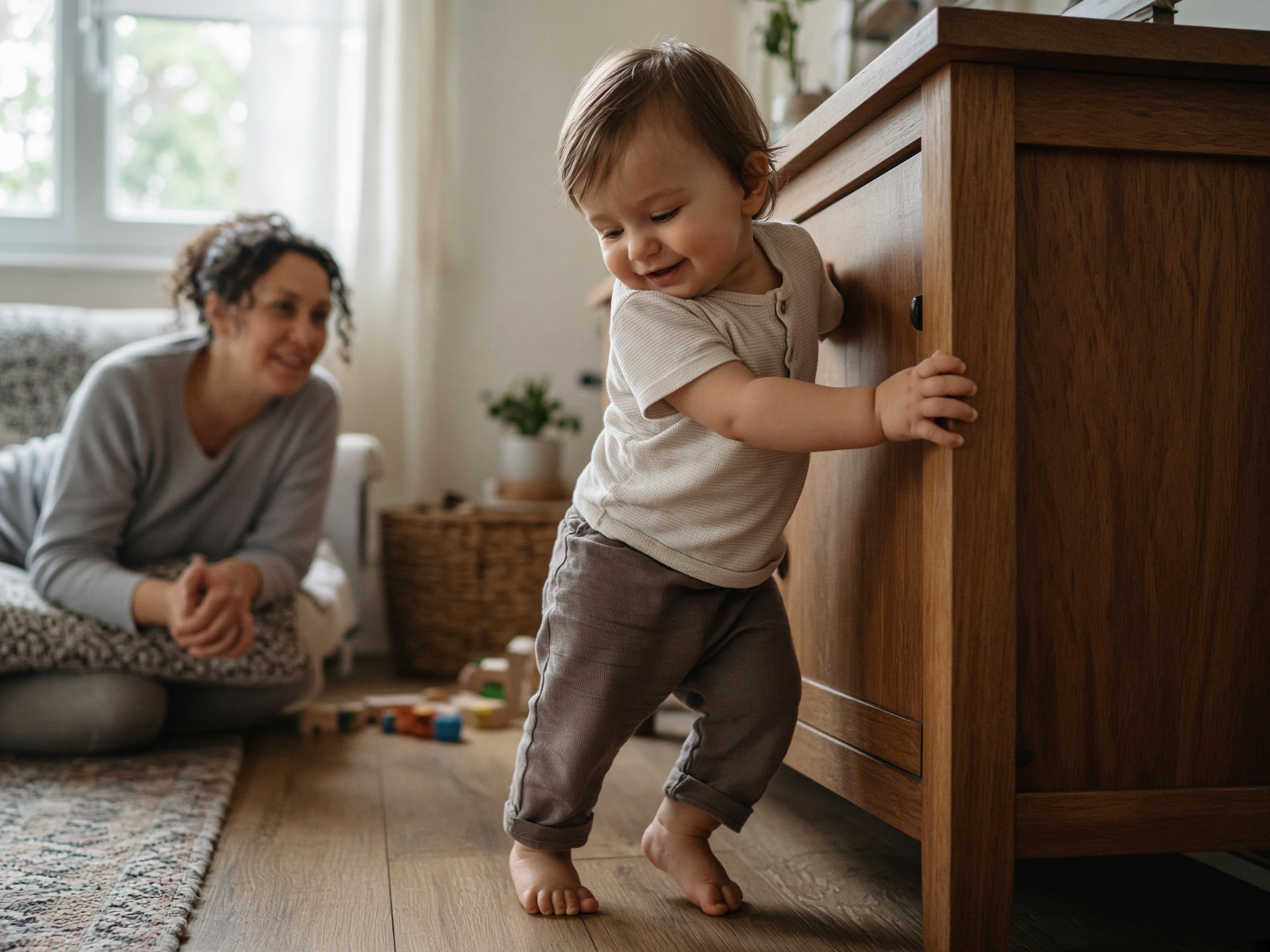
A toddler in a cream henley cruises along a wooden cabinet on a light wood floor while an adult sits on the rug behind them and smiles.
A high chair or a strapped seat keeps the body in one place. A toy on the tray turns dinner into a game you will lose. One or two foods they already eat can sit next to the family dish. That is courtesy, not a second restaurant.
Screens off the table. CDC's toddler pages repeat this because it works. A face looking back is how a child learns the names of foods and the pace of a meal.
Try this
- Pick one meal a day that is actually shared, even if it is breakfast.
- Serve the family food first. Add a familiar food if you need a landing place.
- End the meal when the family ends it. Grazing after a refused dinner teaches the later snack.
- Keep cleanup calm. A lecture about waste is not a feeding strategy.
- If only one adult can sit, sit. The second adult can eat later.
Manners come later than hunger. Wiping a face is enough. A child who throws food is done. End the meal without a speech. Offer the next planned snack later. That is a limit. It is also dinner.
In the house this month
A family meal can be ten minutes. It does not have to be a holiday. The point is faces and the same food, not a candle and a speech.
If work means you never overlap, pick breakfast. Toast at 7:20 with one adult sitting down is a family meal. The internet does not get to define dinner as the only sacred hour.
Throwing food ends the meal. You can say we are done and take the child down. The next food is the next planned time. That is easier to do if you already closed the kitchen.
Guests will stare at the mess. Put a towel under the chair and keep eating. The mess is temporary. The habit of sitting is not.
What you can skip
Skip waiting for a perfect dinner hour. Skip a lecture about waste. Skip screens as the only way to sit.
Skip comparing your table to a photo. Towels exist.
Keep the range in view
Ten minutes of the same food and a face is a family meal. The child decides the amount. The floor needs a towel. Screens off. End the meal when throwing starts. Breakfast counts.
Check in if
If mealtimes are daily battles, or if growth worries you, take the pattern to your pediatrician. A handbook cannot see the child.
Related ages: 12-18 months, 18-24 months, 24-36 months. Pillars: Food, Behavior.
Sources
- CDC. Tips for mealtime routines. cdc.gov
- CDC. Milestones by 2 years. cdc.gov/act-early/milestones/2-years.html
- CDC. Positive parenting tips: toddlers (1 to 2 years). cdc.gov
- CDC. Foods and drinks to encourage. cdc.gov